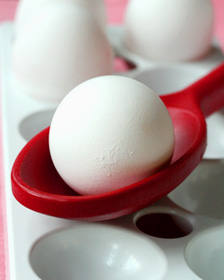
 Why do eggs get a bad rap when it comes to health? One large egg has 6 grams of fat, 213 mg of cholesterol, and 84 calories. That means that eggs are over 60% fat and one third of that happens to be saturated.
Doesn’t sound like a good food choice for someone who has serious cholesterol or weight issues, however, most health studies surrounding egg consumption along with a healthy diet tell us that eggs are not at the root of many food-related health issues. Before I tell you why, let’s see how a homemade breakfast with one cooked egg prepared with 1 teaspoon olive oil, onions and baby spinach served over a slice of whole grain toast stacks up to a fast food breakfast.
What’s In Your Breakfast?
Home Made Egg Breakfast
230 calories, 9 grams of fat total, 1.5 grams of which is saturated
Fast Food “Egg and Muffin” Sandwich
300 calories, 12 grams of fat total, and 5 grams of which is saturated
Fast Food “Egg and Muffin” Sandwich with Sausage
370 calories, 22 grams of fat total, and 8 grams of which is saturated
You’ll notice that the fast food breakfasts are substantially higher in saturated fats. Scientists ran a study at the Harvard School of Public Health, looking at the eating habits of a population of 117,000 nurses who had been followed for 8 to 14 years – and found no significant difference in heart disease risk between those who ate one egg a week and those who ate more than one egg a day.
They also found that foods like eggs, shrimp, and lobster (that contain some cholesterol) are only affecting the LDL cholesterol for a very, very small percentage of people who are sensitive to dietary sources of cholesterol. In most cases, the body synthesizes more cholesterol than is obtained through foods.
Hands down, eating food with high levels of saturated fat (the kind of fat that you’ll find in high quantities in fast foods, packaged baked goods, and processed foods) elevates LDL – the “bad” cholesterol – way more.
So what if you want to enjoy eggs more often, but are still concerned about fat content? Using only the whites or a combo of more whites then yolks can be an excellent option for having eggs in your diet regularly.
Now, let’s turn to another set of health concerns: pathogens such as salmonella!
Eggs and Salmonella
There have been cases where salmonella has spread through unsafe farming practices involved in meat production or fertilizers – like in last year’s case of jalapeños and the recent outbreak with products made from peanut paste.
With respect to eggs, experts estimated in the early 1990s that 1 in 10,000 eggs contained the salmonella virus. A more recent study in 2002 showed that only about 1 in every 30,000 was contaminated. Apparently, the bacteria live in the infected ovaries of the hen and are carried over to the egg white. The best way to protect yourself from eggs that might contain salmonella, is to cook your eggs at 160 F for 1 minute or more.
Health Benefits of Eggs
Eggs are inexpensive, taste great, and can be added to almost any meal. Studies show that eating a high protein breakfast, made from foods like eggs, can help you feel full longer. Egg whites are a dream for the diet conscious since they have 0 fat and only 17 calories a pop. However, only whole eggs are rich in compounds that promote many of the healthy functions in the body. Compounds and vitamins include:
- Tryptophan, an animo acid that is the precusor of serotonin, which can help improve your mood and control your appetite
- Selenium, lowering inflammation of the joints and helping the thyroid to function smoothly
- Choline, helping the cell membrane to work properly, and important in brain development and liver function (eggs happen to be the food that contains the most choline)
- Vitamin B2 (riboflavin), an important antioxidant that helps the body protect itself from cell damage
- Vitamin B5 (pantothenic acid), aids the body in turning carbs and fats into energy and is vital for a healthy pregnancy
- Vitamin B12, important for growth of nerve cells and aids in the process of metabolising energy for your cells
Tips for Cooking Delicious Eggs
I was recently reading my friend Chef Danielle Turner’s new blog, How to Boil and Egg, when I realized how few people out there know how to properly cook and enjoy eggs. Danielle gives the perfect instructions on how to do a soft boiled egg, so I’ll just refer to her technique. However, what about other well-known egg dishes?
- Scrambled
Crack your eggs into a medium bowl. If you want to make them lower in fat, use one yolk for every three egg whites. Whisk with a few spoons of skim milk, or plain non-fat yogurt. Add salt, pepper, and a pinch of paprika. Coat an egg-friendly skillet with non-stick cooking spray and heat over high heat. Add the egg mixture and reduce the heat to medium. With a fork or a heat-proof spatula, slowly mix the eggs in the skillet until soft, cooked “curds”s start to form. Continue to slowly turn the eggs until they are cooked through, about 1 to 2 minutes total. Serve immediately. - Sunny Side Up
Heat an egg-friendly skillet over high heat. Remove the skillet from the heat and coat with a thin layer of cooking spray. Return to the burner and add the egg mixture. Reduce the heat to medium. Sprinkle with salt and freshly cracked pepper. - Once Over Lightly
Follow the same procedure as the “sunny side up”, only gently turn the egg over after 1 to 2 minutes to continue cooking for an additional minute. Even the very skilled cook may break the yolk while turning the egg. If you’re not a master with the spatula, just cover skillet with a tight fitting lid and reduce the heat to low. The egg will steam slightly and a light film of cooked egg white will cover the yolk. - Poached
I’ve always found poached eggs to be tricky if you don’t have the right equipment. Many chefs tell you to add vinegar to a huge pot of boiling water and whirl the water before adding the egg. But there is a much easier way! Silicone egg poachers are little baskets that float in boiling water. Simply crack your egg inside and cook, no experience required. - Baked
Baked eggs are the easiest thing in the world to cook. Break 4 to 5 eggs into a medium bowl. Mix with two spoonfuls of skim milk or plain non-fat yogurt, 2 tablespoons of flour, a pinch of salt, 1/4 teaspoon baking powder, any spice, and a tablespoon of your favorite low-fat grated cheese. Whisk well and pour into small 1-cup ramekins. Bake 5 to 7 minutes at 350 degrees F until the eggs have puffed and are cooked through. Serve immediately. - Omelet
Have your filling ready before you make your omelet! Since omelets cook quickly, you should choose items that are naturally soft or melt easily. Crack 3 to 4 eggs into a medium bowl. If you want to make your omelet lower in fat, use one yolk for every three egg whites. Add salt, pepper, and a pinch of paprika or any spice you like and whisk. Coat an egg-friendly skillet with non-stick cooking spray and heat over high heat. Add the egg mixture and reduce the heat to medium. With a fork or a heat-proof spatula, slowly mix the eggs 3 to 4 times in the skillet until soft, cooked “curds”s start to form. When the egg mixture is still wet, turn the pan so that the any wet egg mixture fills in any spaces where the inside of the pan is not covered. Fill with your favorites.

Looking for healthy ideas for stuffing your omelet? Try chopped fresh herbs – they taste great, and are extremely low in calories. Thinly sliced mushrooms, like cremini, white button, shitake, and portobello add lots of flavor and cook quickly. Add 1/4 cup of grated low-fat cheese (like 2% cheddar or part-skim mozzarella), making for a rich tasting addition to a high protein meal. Jarred tomato salsa adds zing and texture to your omelet with no fat and only 20-30 calories.
Canned beans, like navy, northern white, and black beans can add creaminess and fiber with hardly any fat! Thinly sliced baby spinach cooks quickly and packs a nutritional punch. Thinly sliced red pepper, zucchini, and red onion can also be a flavorful options.
Related Posts
- Learn more about the incredible egg, a site dedicated to all things egg.
- Get answers to your questions about avoiding salmonella, courtesy of WebMD.
- Tune into Kathy Maister’s video and How To’s on cooking eggs.
- Learn more about the unique health properties of eggs.
 Are you ready to look better, feel more energized, and get back that youthful feeling you remember having as a kid? I can help you on a journey that will change the way you eat — for good. My












 As a healthy cooking expert, health coach and TV host,

Another way to avoid salmonella in eggs is to use pasteurized eggs. Undercooked eggs like poached eggs, fried eggs, and sunny side up eggs are still at risk of salmonella. I would never think of making any recipes with raw or undercooked eggs for my kids without pasteurized eggs because their immune systems are still developing.
Yes- great point!
Love your informative posts! Great pictures!
-Chef Mary Payne Moran